The Stranger’s Thumb: Notes on Reading Two-Star Reviews of My Own Poems
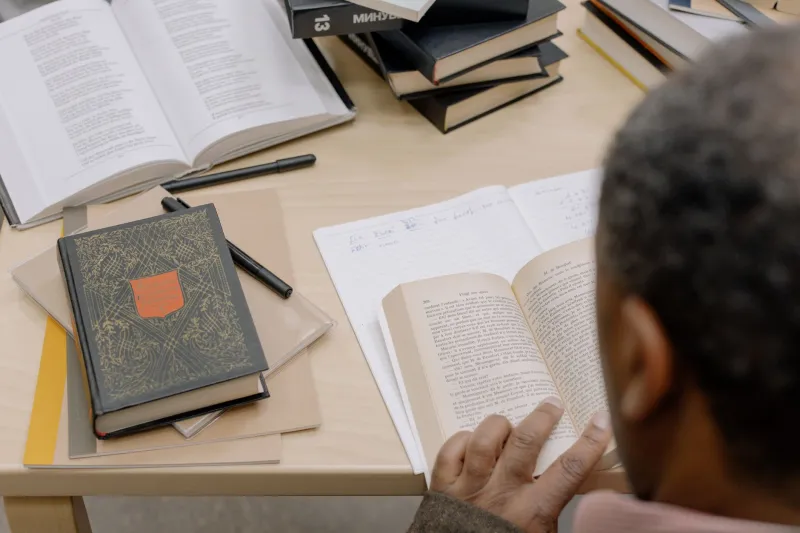
A workshop is a room you choose. The table is familiar, the coffee is mediocre in a predictable way, and the people around it have agreed, at least implicitly, to care about the poem in front of them. A public review is not that room. It is a room you did not choose, entered by a stranger who owes you neither patience nor context, and who may have read your book on a train, in a waiting room, or in a mood that has nothing to do with you. When the review is two stars, the room feels especially small.
I have spent the better part of a decade reading reviews of my own books. The generous ones are pleasant but rarely instructive; they confirm what I hoped was true and then drift away. The hostile ones are another matter. They lodge. They interrupt the day. And yet, after enough of them, a pattern emerges: the two-star review is not a verdict but a peculiar kind of workshop, one led by a stranger whose thumb has done the talking.
The Review as a Room You Did Not Choose
The first thing to understand about public criticism is that it is not addressed to the writer. It is addressed to other readers. A review on a bookstore site, a library catalog, or a social reading platform is a signal in a marketplace. The reviewer is not trying to help me revise; the reviewer is trying to describe an experience. This distinction matters because it changes what I am entitled to expect. I am not owed a workshop response. I am overhearing a reader’s account of my book, and overhearing is not the same as being invited to reply.
That does not make the two-star review painless. It does make it readable. Once I stop treating the review as a failed workshop and start treating it as a data point about how a book lands in the world, the question shifts from “Is this fair?” to “What, if anything, is here?”
Three Buckets: Signal, Taste, and Accident
After many passes through my own reviews, I have found it useful to sort the complaints into three rough buckets. The sorting is imperfect, but it keeps me from either dismissing everything or believing everything.
Signal
Signal is the small portion of criticism that points to something I can actually use. It is not necessarily pleasant, but it is specific. A reader who says the book “kept losing its thread in the middle” may be describing a structural problem. A reader who says “I could not tell who was speaking in the third section” may be describing a problem of voice or sequence. A reader who says “the poems about the father were the only ones that felt alive” may be describing an imbalance in the collection. Signal is not always correct, but it is testable. It can be taken back to the manuscript, or to the next manuscript, and examined.
Taste
Taste is the larger portion. A reader who wanted more narrative and less lyric, more accessibility and less ambiguity, more humor and less grief, is not describing a flaw in the poem so much as a preference the poem did not satisfy. Taste is real—it governs how books find readers—but it is not a revision instruction. A two-star review that says “too fragmented for me” is useful information about that reader’s appetite. It is not proof that fragmentation is a mistake. The practical task is to distinguish between “this did not work for me” and “this did not work.” The first is a fact about reception. The second is a claim about craft, and it requires evidence.
Accident
Accident is the most interesting bucket. Sometimes a reader’s complaint reveals something about the poem that I did not intend and cannot unsee. A reviewer once objected that a poem’s recurring image of a closed door felt “heavy-handed.” I had thought of the door as a modest detail. The complaint did not persuade me to remove it, but it did make me aware that the image was carrying more weight than I had assigned it. That is an accidental insight: the reader’s irritation became a kind of diagnostic light. Accidental insights are not always actionable, but they are often the most durable. They tell me how a poem behaves when it leaves the house.
What a Friendly Workshop Cannot Tell You
A workshop, however honest, is still a room of people who know me or know my work or know the conventions of the genre. That familiarity is a gift, but it is also a limitation. A workshop can tell me whether a poem is clear to trained readers. It cannot tell me what the poem feels like to a stranger who picked up the book because of the cover, or because a friend recommended it, or because it was the only poetry available in a airport bookstore in Ohio. The two-star review can tell me that. It can tell me that the book was too quiet for a reader who wanted noise, or too noisy for a reader who wanted quiet. It can tell me that a poem I thought was generous read as withholding. None of this is the whole truth, but it is a kind of truth that workshops rarely supply.
A Protocol for Reading
Over time I have developed a protocol, not because I am disciplined but because I am susceptible. The protocol is simple, and it is designed to protect the work from my own reactivity.
First, I wait. Not a day, if I can manage it—a week. The first reading of a harsh review is not reading; it is flinching. Waiting does not make the review kinder, but it makes me less likely to confuse my reaction with the review’s content.
Second, I transcribe the complaint in neutral language. “The middle section felt repetitive” rather than “the reviewer hated the middle section.” Transcription forces the complaint out of its tone and into its claim.
Third, I sort it into signal, taste, or accident. Most of it goes into taste. That is not a dismissal; it is a category. Taste is how books find their people, and no book finds everyone.
Fourth, I test one thing. Not five things. One. If the review suggests a structural problem, I read the middle section aloud. If it suggests a voice problem, I mark the places where the voice shifts. I do not rewrite to please the reviewer. I investigate to see whether the complaint has purchase.
Fifth, I put it away. The review is not a task list. It is a report from the world, and the world is not my editor.
Neither Litigate Nor Comply
The temptation with a two-star review is to argue with it or to obey it. Arguing is a way of insisting that the reader’s experience is wrong, which is rarely true and never useful. Obeying is a way of letting a stranger’s thumb rewrite the book, which is also rarely true and never useful. The middle path is to receive the review as information: some of it signal, most of it taste, a little of it accident. The writer’s job is not to win the argument or to submit to it. The writer’s job is to keep the poem’s intentions intact while remaining curious about how those intentions travel.
A two-star review is not a workshop. But it is a room, and sometimes a room you did not choose can show you something about the house you thought you knew. I do not recommend seeking out the harshest reviews, and I do not recommend pretending they do not sting. I recommend reading them the way a poet reads anything else: slowly, with attention to what is actually on the page, and with the freedom to decide what belongs in the next draft and what belongs only to the stranger’s thumb.