A Stranger in Fifty Words: The Poet's Bio as Accidental Autobiography
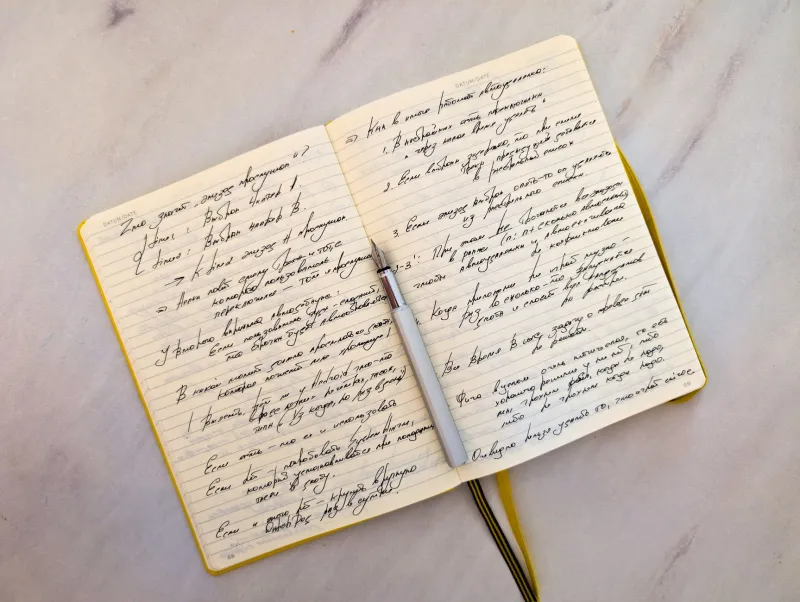
There is a small literary form that almost no one teaches and nearly every poet practices: the author bio. Fifty words, more or less, in the third person, pasted beneath a poem in a journal, appended to a reading announcement, stamped at the bottom of an essay. It is supposed to be invisible. It is supposed to say who you are and get out of the way. After writing and revising something like a hundred of them over the past decade, I have come to distrust that premise. The bio is not invisible. It is a compressed self-portrait, and like all compressed things, it leaks.
The Anatomy of the Fifty-Word Self
The standard bio has a predictable architecture. Name. Maybe a geographic anchor. A book or two. A prize, a fellowship, a journal. A teaching position. A current project. The order varies, but the ingredients are remarkably stable. What interests me is not the formula but the pressure it exerts. In fifty words, every choice is a deletion. You cannot mention the summer you spent waitressing, the poem that took five years, the fact that you write in the car. You must choose a version of yourself that fits the space.
I began keeping a file of my own bios the way some poets keep a file of rejection letters. Not out of vanity, but out of curiosity. I wanted to see what I had decided, year after year, was essential. The file revealed a pattern I had not noticed while writing: I changed the order of my sentences more often than I changed their content. The same three facts, rearranged like furniture in a small apartment. A book, a place, a job. Each version felt new. Each version was, in substance, the same.
Geography as a Costume
Poets love a geographic anchor. The bio says “lives in the Midwest” or “lives in New York” or “lives in the South” with the confidence of a passport stamp. I have used all three at different times, and I have come to see geography as a kind of costume. It tells the reader something true, but it also tells them something convenient. “Lives in the Midwest” can signal plainspokenness. “Lives in New York” can signal literary seriousness. “Lives in the South” can signal a relationship to history, to heat, to family. None of these signals is wrong. None of them is the whole story.
What I notice now is how often I used place to avoid saying something harder. A bio that says “lives in Ohio” can hide a decade of moving. A bio that says “teaches at a university” can hide the adjunct years, the commute, the poems written in parking lots. The bio is not a lie. It is a selection. But selection has a way of becoming a kind of argument. After a while, you begin to believe your own fifty words.
The Credential Temptation
There is a particular pleasure in watching a bio inflate. It happens slowly, then all at once. A poem becomes “widely published.” A reading becomes “a national tour.” A fellowship becomes “award-winning.” I have felt the temptation myself. When you have only fifty words, every adjective feels earned. But the inflation is rarely about the reader. It is about the writer, trying to hear an assurance that the work itself cannot provide.
The truest bios I have read are often the plainest. They say what the poet does and where they are, and they stop. They do not apologize for the smallness of a life. They do not pretend that a publication is a transformation. They trust the poem to do the work that the bio cannot.
What the Bio Cannot Say
The bio cannot say that you are afraid the new book is worse than the last one. It cannot say that you have been writing the same poem for seven years. It cannot say that you are a better reader than you are a writer, or that you are a better writer than you are a person, or that you have no idea what you are doing. These are the things I want to know when I read a bio, and these are the things the form forbids.
So the bio becomes a kind of negative space. What is left out is almost as revealing as what is included. A bio that lists every journal but no book. A bio that lists every book but no teaching. A bio that mentions a dog. A bio that mentions a prize three times. These are not neutral facts. They are choices, and choices have a shape.
The Sentence That Betrays You
Every poet has one sentence in their bio that they did not plan. It slips in during a revision, or it survives from an earlier draft because it sounded good. It is the sentence that says more than the rest. For me, it was a line about writing “poems about the American landscape and the people who misunderstand it.” I do not remember writing that sentence. I do not know if I believe it. But it has followed me through a dozen bios, and I have stopped trying to remove it.
That sentence is the closest thing I have to a poetics. It is not accurate. It is not complete. But it is mine. I suspect every poet has one. The bio is supposed to be a summary. Sometimes it becomes a confession.
Revising the Third Person
I still write bios. I still paste them beneath poems and reading announcements. But I write them differently now. I try to use fewer adjectives. I try to let the geography be a fact rather than a mood. I try to leave one sentence unexplained. And I try to remember that the third person is not a disguise. It is a voice I borrow for fifty words, and then I give it back to the poem.
The bio is a strange form, but it is not a false one. It is a small stage, and every poet who steps onto it makes a choice about what to carry. After a hundred bios, I have learned that the choices are the poem’s business too. The third person is not someone else. It is me, edited. And the edit is always worth reading.