Five Poems That Broke Me Open: A Personal Map of Poetic Lineage
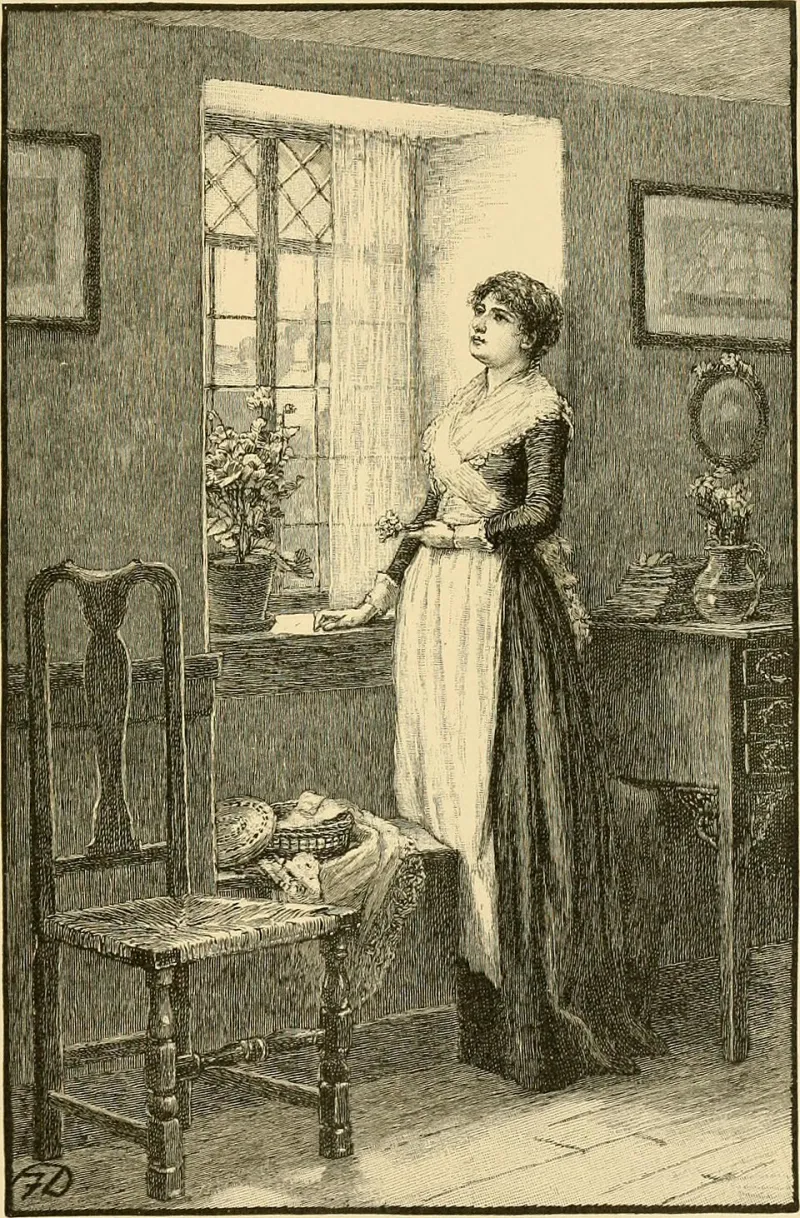
Photo: Internet Archive Book Images, No restrictions, via Wikimedia Commons
Ask a poet about their influences and you will usually get a list of names. Ask instead about specific poems—particular, physical encounters with particular texts—and the conversation gets more honest. Influence does not arrive as a career or a colophon. It arrives as a single poem, read in a specific place, at a specific hour, when you were specifically unprepared for it.
What follows are five such encounters from my own reading life. Each one broke something in my writing that needed breaking. I offer them not as a canon but as a method: writing students should be able to name their own five, with dates and locations, the way you might map a family tree.
1. Elizabeth Bishop, "One Art" — The Discipline of the Lie
I first read "One Art" in a used bookstore in Iowa City, standing up, in the poetry section between the register and the door. I had heard of villanelles; I had not heard a villanelle lie before.
The craft lesson everyone teaches is the form: nineteen lines, two refrains, the loss compounding with each stanza until the poem confesses what it has been denying. But what undid me was the parenthetical—"(Write it!)"—the voice cracking through the composed surface like a hand pressed against glass. I learned from Bishop that a poem can perform control while dramatizing its collapse, and that the gap between the two is where the reader lives. For years afterward, I could not end a poem without asking: what is this poem pretending, and where does the pretending fail?
2. James Wright, "Lying in a Hammock at William Duffy's Farm in Pine Island, Minnesota" — The Earned Ending
A professor assigned this in my second year of graduate school, and I resented it on first reading. The famous last line—"I have wasted my life"—struck me as a fortune cookie with a landscape attached.
Then I taught it myself, and the resentment turned to awe. The poem's genius is not the conclusion but the duration: the bronze butterfly, the empty house, the chicken hawk looking for a mate, each image given its own full breath before the speaker is permitted to speak. Wright taught me that a line break can be a pause in a testimony, and that the only endings worth writing are the ones the poem has made inevitable. My own poems got longer and quieter after this one. They are still paying that debt.
3. Lucille Clifton, "homage to my hips" — Permission
I encountered Clifton at a reading in the South, in a room full of people who audibly responded to every line, and I understood for the first time that a poem could be an event in a body, not just an object on a page.
The craft lesson here is deceptively small: Clifton writes in lowercase, unpunctuated confidence, and the form enacts the hips' refusal to be contained. But what she gave me was permission—permission for joy, for the vernacular, for a poem that does not apologize for its appetite. After Clifton, I stopped writing poems that seemed to be asking to be graded.
4. Jack Gilbert, "A Brief for the Defense" — The Risk of the Claim
A friend photocopied this poem and mailed it to me with no note. I read it at my kitchen table in Ohio and had to put it down twice.
Gilbert makes enormous declarative claims—"We must risk delight"—and the poem survives them because it has done the arguing first, stanza by stanza, acknowledging the evidence of misery before insisting on something else. Most of us are taught to distrust the big statement; Gilbert taught me when to make it anyway, and how much scaffolding a claim requires. I now tell students: earn the audacious sentence, then let it stand alone at the end of a line where it can't hide.
5. Emily Dickinson, Poem 650 ("Pain—has an Element of Blank—") — Silence as Structure
My first encounter was in a high school anthology, but my real encounter came years later, reading the fascicles and discovering that Dickinson's dashes were not typographical quirks but architecture. In 650, the dashes around each noun create a field of hesitation—pain described as blankness, rendered in blankness.
No poet changed my relationship to white space more. Dickinson taught me that what a poem refuses to say has grammatical weight, that the pause is a unit of meaning. I count my silences now the way I count my syllables.
Mapping Your Own Lineage
The exercise I give my students is this: name five poems, and for each one, record where you were, how old you were, and what your writing did afterward. The map that emerges is rarely the list of famous names you'd recite at a party. It is more particular, more embarrassing, more true—and it is the most accurate portrait of your poetics you will ever produce.