Opening With the Sky: An Audit of My Weather-Logged Drafts
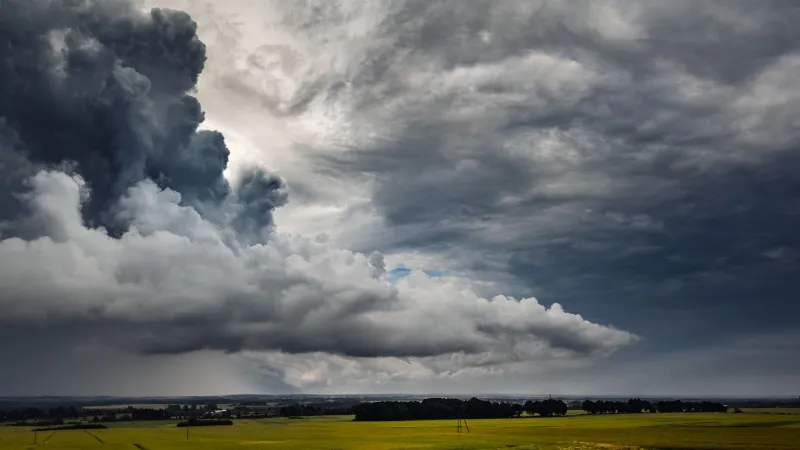
Last winter, during an ice storm that shut down most of Mississippi for three days, I did what poets do: I wrote about it. Then I did something poets almost never do. I went back through twenty years of drafts and counted how many of them open with the sky.
The number was fifty-three. Fifty-three unpublished poems that begin, in one way or another, with weather. Rain on a tin roof in Hattiesburg. A heat wave pressing down on a parking lot in Jackson. Snow — rare, almost mythical snow — arriving over the Tennessee line like a rumor. I sat at my desk with the spreadsheet glowing and asked myself the question every American poet must eventually face: is this a habit, or is it a crutch?
The Case Against the Weather Poem
Let the prosecution speak first. The weather opening has become, in workshop after workshop, a kind of reflex. A student unsure how to begin a poem about her father's death reaches for fog. A poet writing about divorce reaches for the first hard frost. The weather becomes a decoy emotion — we can talk about the sleet because we cannot talk about the marriage.
I have heard the complaint a hundred times, usually phrased as advice: cut the weather, get to the real thing. And there is truth in it. Weather-as-shorthand is the softest, laziest register we have. The rain that 'mirrors' grief. The storm that 'reflects' the argument. These moves ask nothing of the reader and less of the writer. They are the greeting cards of the lyric.
The Case for the Inheritance
But then let the defense speak, because the defense has better witnesses. Frost's snowy woods. Dickinson's slant light. Whitman's 'out of the cradle' — the sea, the breeze, the late moon. The weather poem is not a cliché we invented; it is the ground floor of American poetry, the oldest room in the house. Our forebears wrote weather because weather was what happened to people before climate control, before the interstate, before the thermostat made the sky optional.
And there is something else. Weather remains the one experience every reader shares. Not everyone has been divorced, or served in a war, or raised in a farmhouse. Everyone has been rained on. When a poem opens with the weather, it opens on common ground — and the best of them then complicate that ground until it is no longer common at all.
What My Fifty-Three Drafts Told Me
So I audited. I read all fifty-three weather-opening drafts in a single afternoon, which I do not recommend to anyone's self-esteem. Here is what I found.
Roughly forty of them were, frankly, decoys. The rain was a stand-in. Delete the first stanza and the poem improved immediately, the way a room improves when you remove the plastic furniture cover.
But thirteen were different. In those, the weather was not decoration or metaphor. It was a participant. In one draft, a summer thunderstorm knocks the power out during a family dinner, and the poem is not really about the storm at all — the storm is simply the excuse the family needed to sit in the dark together. In another, a drought poem, the weather's absence does the work that a metaphor would have clumsily done. The sky in those thirteen drafts is not shorthand for emotion. It is a character with its own agenda, indifferent to the speaker, which is, of course, the truest thing weather ever does.
A Working Rule
I have settled, provisionally, on a test I now apply to every sky-opening draft. Ask: if the weather in this poem changed, would anything in the poem change? If the answer is no — if the rain is just rain-colored wallpaper — then cut it. But if the weather is doing something the speaker cannot do — leaving, arriving, refusing, destroying — then it has earned its place at the first of the line.
The cliché, it turns out, is not the weather. The cliché is the substitution. Weather fails us only when we use it to avoid saying the thing. When we let the sky be the sky — vast, unbothered, older than our griefs — it writes better than we do, and always has.
I kept the thirteen. The other forty I moved to a folder I labeled, with some affection, 'Rain Checks.'