Shelved by Sorrow: What My Bookcases Know That I Don't
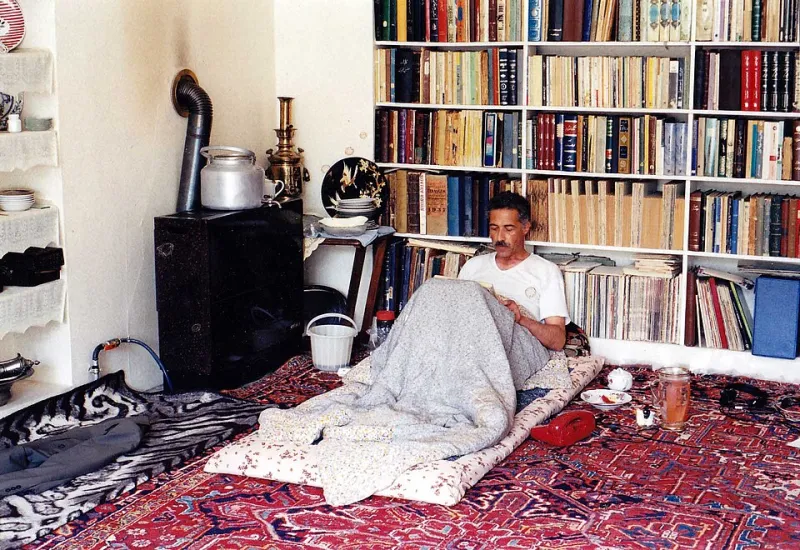
Photo: Jacopo188, CC BY-SA 3.0, via Wikimedia Commons
Visitors to my study often pause in front of the bookcases and frown. They are not disorderly, exactly. They are orderly in a way that resists explanation. There is no alphabet here, no Dewey, no ISBN logic. Instead, there is a system I have never said aloud until now: my library is organized by grief.
The Shelf That Isn't About Books
The top shelf of the tallest case holds the poets I read the year my father was dying — Jack Gilbert, mostly, and a water-stressed paperback of Jane Kenyon that still smells faintly of the hospice waiting room. I did not decide this. One afternoon in 2016 I simply found that I could not shelve Kenyon next to anyone living, so she went up, and Gilbert went with her, and the arrangement has held ever since.
This is the confession part: poets do not shelve books. We shelve ourselves. The library becomes an X-ray of the interior, a map of influence and loss and ambition that we would never draw on purpose. Ask a poet where a certain book is and watch them point with their whole body before they can articulate the logic. "It's with the winter books," they might say, and mean exactly that.
Eras, Weights, Weathers
Below the grief shelf, the taxonomy grows stranger. There is a section for books that taught me the line break — Bishop, Levine, old Lucille Clifton — shelved not alphabetically but in the order I encountered them, a sedimentary record of my apprenticeship. There is a shelf of books I admired before I could understand them, waiting like sealed letters. There is a small, embarrassing cluster of books I loved at twenty-three that I now read with a wince, kept anyway, because removing them would feel like erasing the person who needed them.
Some arrangements are temporal. The poems I read while writing my second book occupy their own stretch of shelving, leaning together like people who survived the same storm. Some are emotional. A slim volume by a friend who died three years ago sits face-out, not because I consult it often but because I want the room to hold him.
What the Arrangement Teaches
I have come to think of this as a craft practice, not a quirk. When I am stuck on a poem, I go to the shelf that holds the poets whose work I was reading during the last time I was stuck in this particular way. The body remembers the geography of the problem. The shelf knows which teachers to summon.
There is a secondary lesson, too, about honesty. Alphabetizing is a public gesture; it implies a neutral, rational relationship to literature. My system confesses things I would hesitate to say at a reading: which books I associate with hospitals, which with marriages, which with the long gray stretch of a rejected manuscript. A bookcase organized by feeling is a diary with spines.
Decoding Your Own Shelves
If you are a writer, I would wager your library has a secret grammar, too. Try this: stand in front of your cases and ask what determines adjacency. Which books are never permitted to touch? Which face outward? Where did you put the book that changed you, and what did you place beside it — a companion, a rival, a bodyguard?
Then ask the harder question: what does the arrangement say about the person who made it? My grief shelf is not morbid. It is a claim — that sorrow is a genre of reading, that certain poems belong to certain hours, that a life in books is also a life in time. The alphabet would flatten all of that. The alphabet has never lost anyone.
So I leave the frowning visitors their confusion, and I leave Kenyon on the high shelf where the light comes in late in the afternoon, and I keep shelving by weather, by wound, by the slow sediment of years. It is not a system anyone else could use. That is how I know it is mine.